Knows the tariff, not the toy
Compression stops at “we cannot crush the goods”, so soft goods pay the volumetric rate in full. The declaration is written from a commodity code, not from the filling inside.
We forward one category — plush and the soft goods that travel with it — and we make it too. That is the whole advantage: the people compressing your cartons know how far a filling will go before it stops bouncing back, so 30–50% of the volume comes out and the toy still arrives in shape. Sourcing for the rest of the range rides on the same invoice.
Only one of them knows what happens to the toy after the tape goes on. The difference shows up in the carton dimensions, the declaration and who is accountable when the container lands.
Compression stops at “we cannot crush the goods”, so soft goods pay the volumetric rate in full. The declaration is written from a commodity code, not from the filling inside.
Quotes FOB and hands you a container number. Compression, carton strength, the destination charges and the last mile are somebody else’s problem.
Compression is measured against the filling we bought. The paperwork is written by the people who made the goods. Sourced items ride in the same carton plan, and one contact answers until it lands.
One contact, pattern to delivered cartonA plush toy weighs grams and occupies litres. Air and express carriers bill the greater of the scale weight and the volumetric weight, and for soft goods the volumetric number always wins. A carton that could travel at 40% of its size is paying for the other 60%.
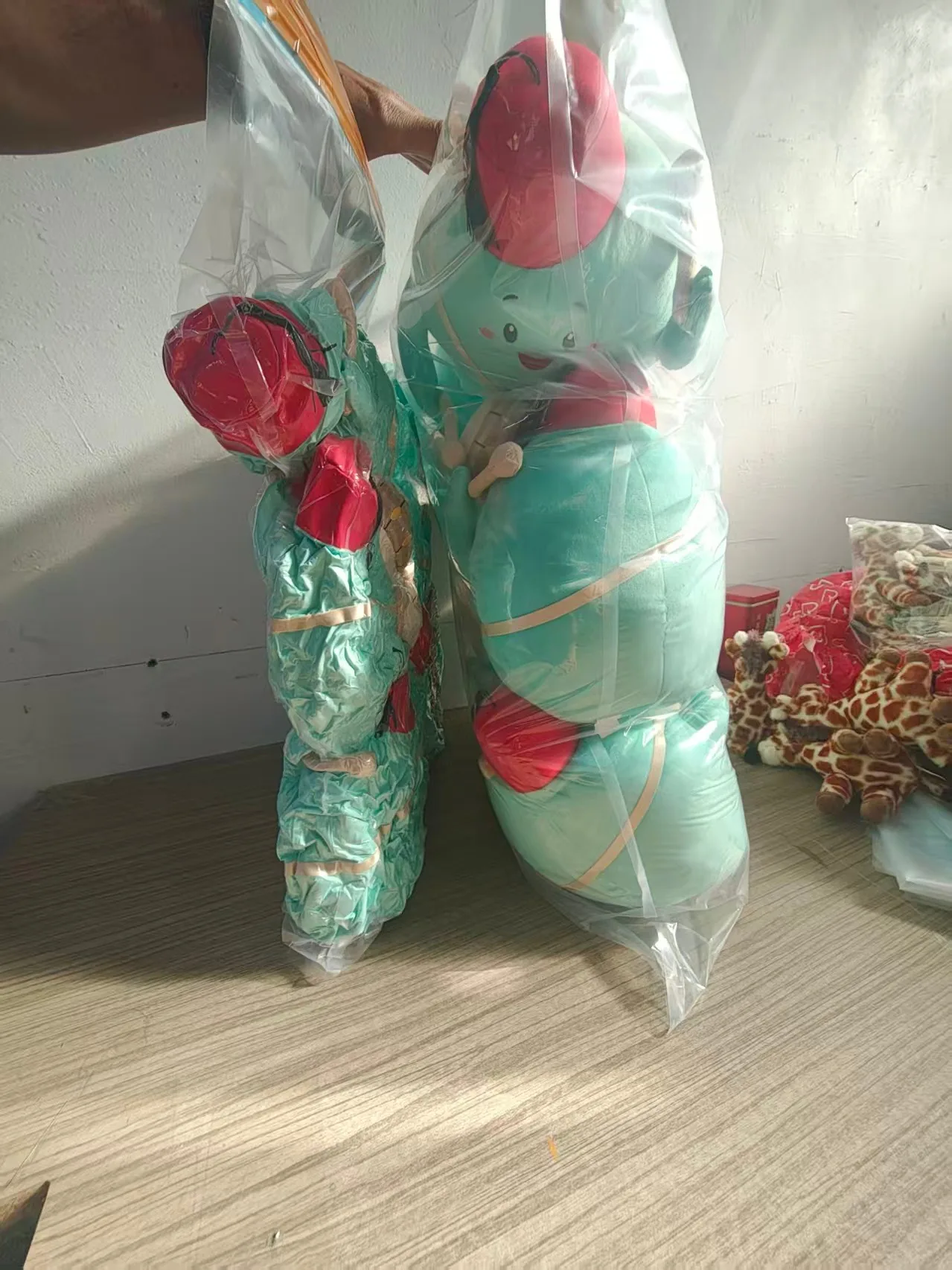
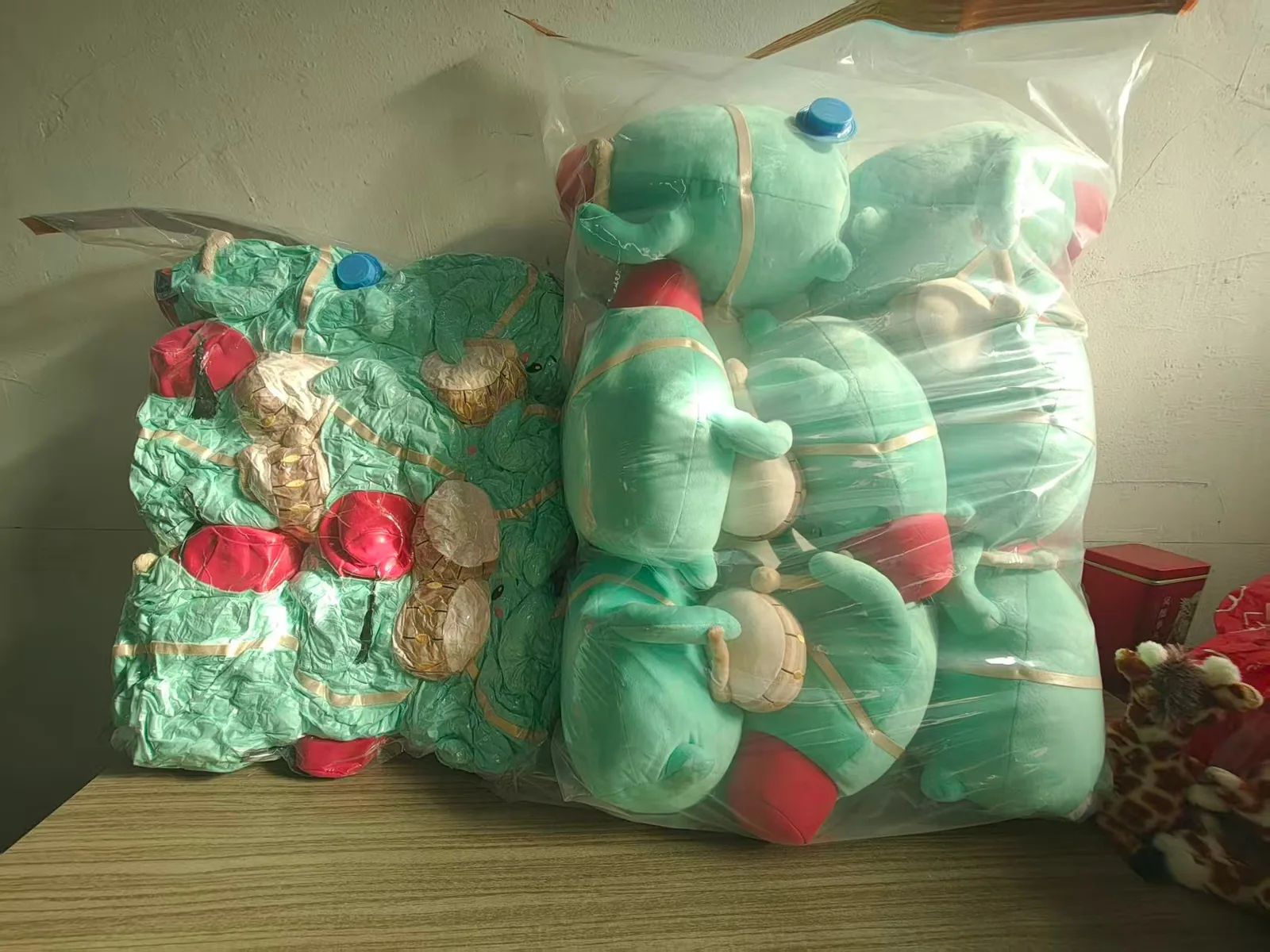
A press flattens a toy with force: the filling takes the damage and comes back lumpy. Our packers compress by hand — folding along the seams, rolling the body, taping the bundle, bagging it — so the fibre keeps its structure and the shape returns when the bag opens.
Limbs fold where the pattern already creases. No heat, no platen, no crushed pile — the toy is dressed for travel, not flattened.
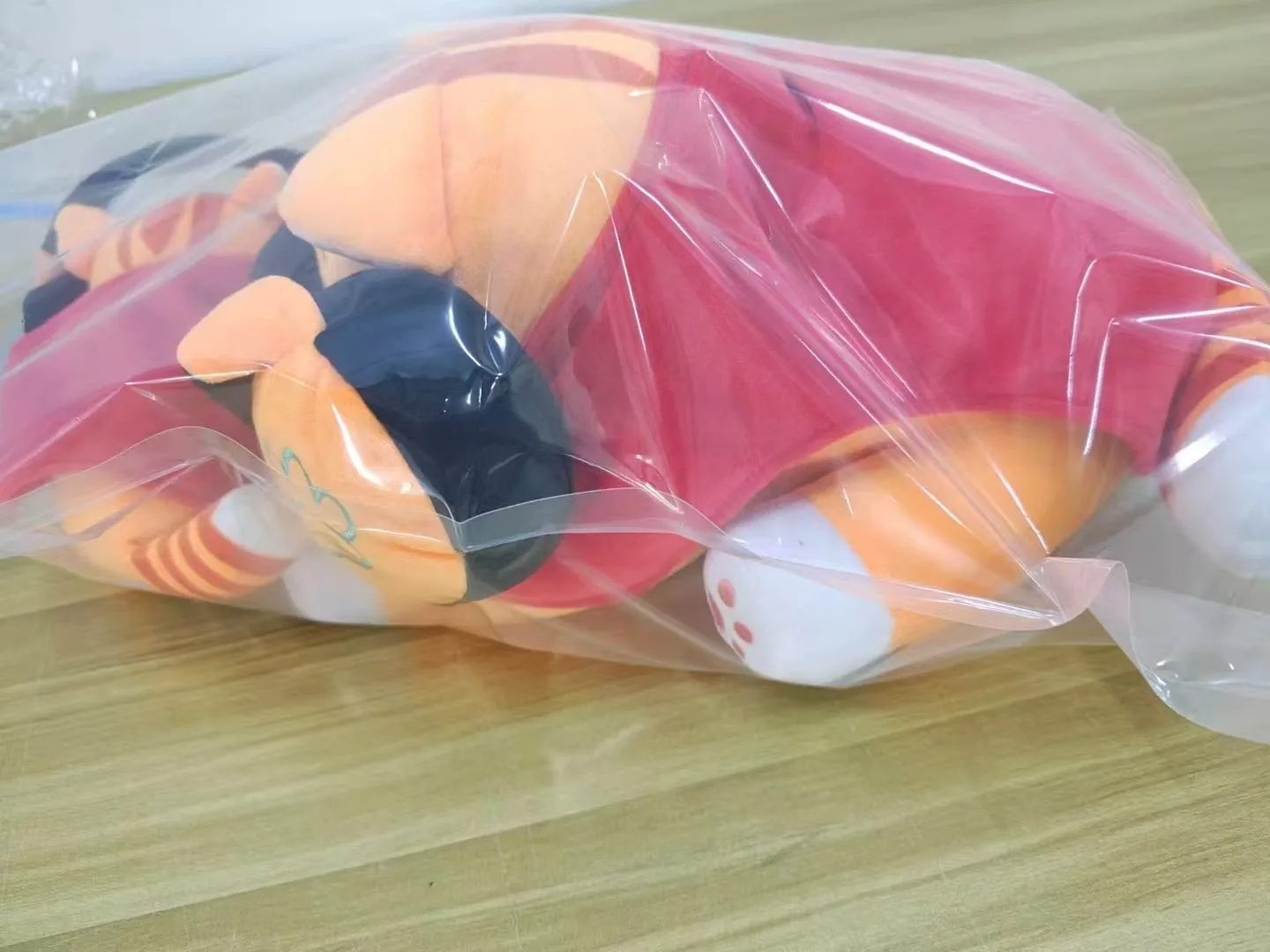
Each bundle is taped and bagged before it goes in the box, so a compressed toy arrives clean, dry and counted against the packing list.
Measured carton volume drops by 30–50% against an uncompressed pack. Soft makes and small charms compress hardest; firm 100 cm display plush sits at the low end.
Move the numbers to your own shipment. Chargeable weight uses the standard air factor of 167 kg per cubic metre; the compression rate is the 30–50% range we measure on your cartons.
Arithmetic only — the firm quote uses your measured carton and the carrier tariff of the week. Sea freight is priced per cubic metre, so the same volume cut applies with a different rate.
Plush is what we make. Everything else an order needs — pet products, textiles, keychains, blind boxes, general toys — we buy to your brief and consolidate, so one shipment leaves with one invoice and one packing list. It is a buying service on your behalf, quoted per order rather than sold from a piece-price list.
The channel is chosen against the goods, the deadline and the landed cost — not against whichever carrier answers first.
Billed on volumetric weight, so this is where compression pays the most. Sampling, launch stock and short runs of high-value characters.
Your cartons move with a booked consignment. We deliver to the forwarder compressed and pre-measured, so the chargeable weight is agreed before it flies.
Cheapest per cubic metre, and the case where a 40% smaller carton changes how much of a container you buy. Cartons are taped and stacked for the voyage.
Magnets, electronics, NFC modules, liquids, powders, laser pointers, branded goods — routed on a line licensed to carry them, declared properly rather than hidden.
Duty and tax paid, delivered to the address, one number on the invoice. Or FOB and EXW if you already have a forwarder you trust.
A plush pallet and a blind-box carton do not travel the same way. The route is written against the category, the deadline and the landed cost — then re-quoted when the mix changes.
Accounts come back season after season, which is a number we would rather you check than a badge we print. The reviews below are the public ones, and every compression run can be filmed for you before the carton is sealed.
From the product list to the tracking number, without a second supplier in the middle.
Product, quantity, carton size if you have one.
Compression rate, carton count and packed volume.
Air, sea, express or DDP — quoted against the category.
Hand-packed, filmed if you ask, approved before sealing.
Invoice, packing list, test reports, customs data.
Booked, tracked, and one contact until it lands.
The questions that come up the first time a buyer compresses a plush shipment.
Hand compression folds along the seams and works with the fibre instead of pressing against it. Filling recovers after unpacking; pile that has been folded for weeks may want a shake or a warm room to stand back up. A machine press — the thing that leaves permanent creases — is not what we use.
30–50% less volume on the same goods. Small charms and soft makes compress hardest; firm 100 cm display plush sits nearer 30%. We measure the packed carton before quoting freight, so the number on the quote is the number on the box.
Yes. Safety testing runs on the finished toy before packing, and labels are attached to the toy rather than the carton. Compression changes the pack, not the product or its paperwork.
US$5,000 per order for goods we buy on your behalf, whatever the category or mix. Custom plush from your own artwork stays at 100 pcs per new design — two different services, two different minimums. Sourced goods are quoted per order, so there is no piece-price list to browse: send the list and the quote comes back itemised.
Yes — duty and tax paid to your door, or FOB and EXW if you book your own forwarder. Say which one you want and the quote is written to match, including the compressed carton dimensions the forwarder will ask for.
Ask and we film it: your goods being folded, taped, bagged and cartoned, with your labels in frame. The clip arrives with the packing list and you approve the pack before the carton is sealed.